Physical Address
304 North Cardinal St.
Dorchester Center, MA 02124
Physical Address
304 North Cardinal St.
Dorchester Center, MA 02124

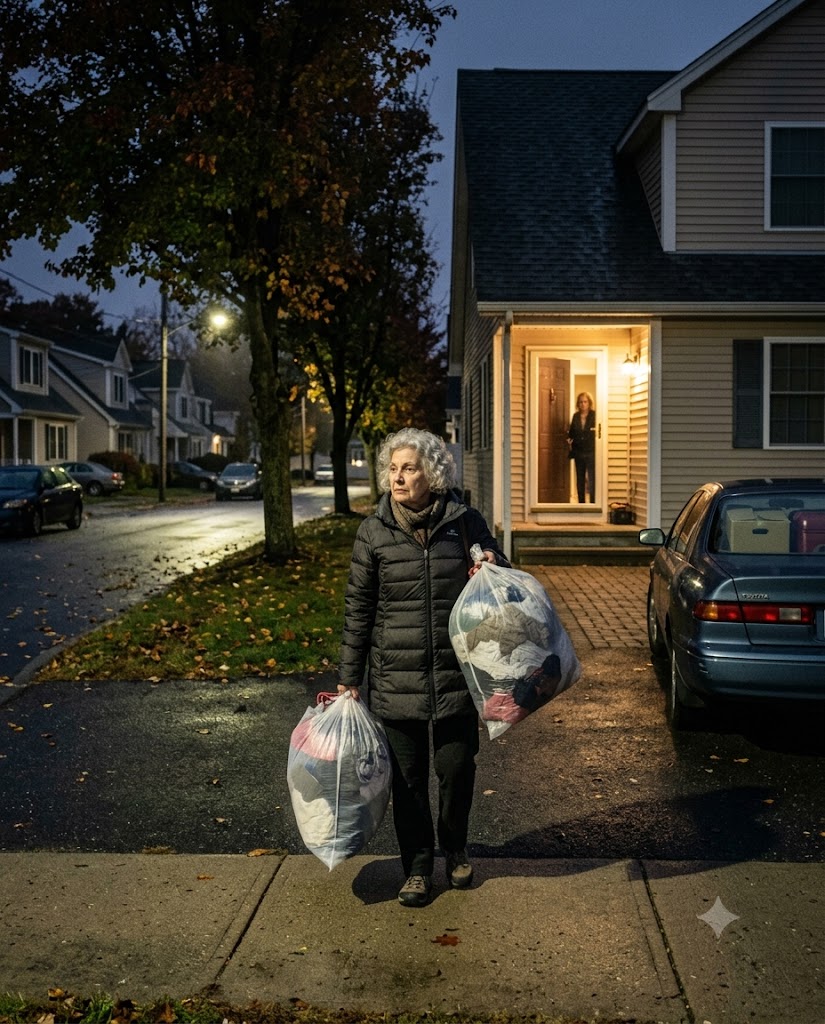
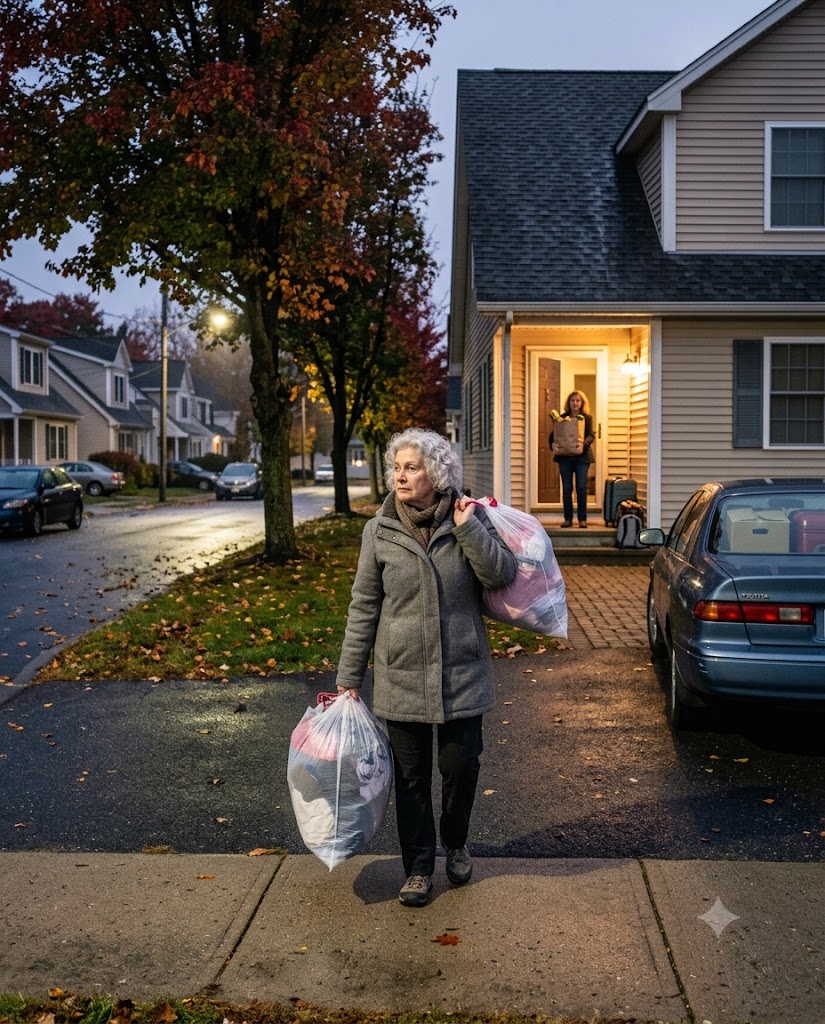
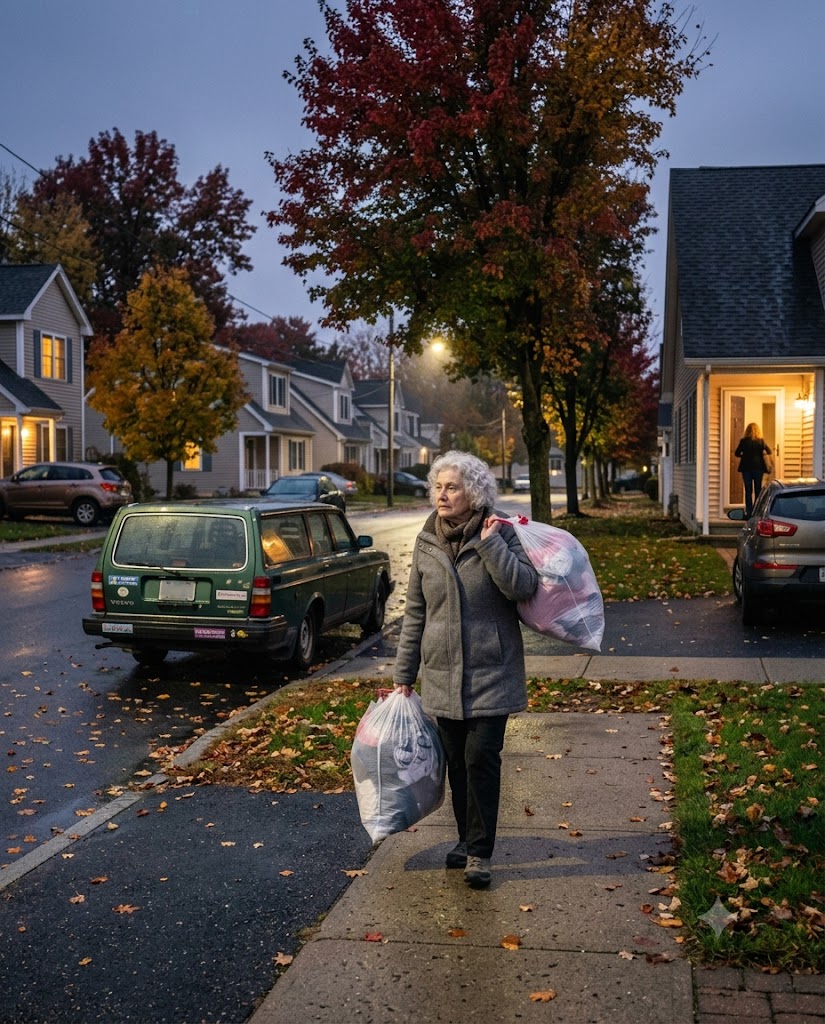
Three weeks after my 74-year-old mother moved in with my brother, she appeared on my porch after dark, clutching two grocery bags stuffed with clothes.
It was raining.
She was still wearing slippers.
And the very first thing she said was:
“Please don’t call Scott yet.”
My stomach sank.
Moving in with my brother had actually been Scott’s idea.
Mom had lived alone ever since Dad passed away five years ago. She still drove herself around, did her own shopping, met friends for lunch, and was completely capable of managing her own home.
But Scott had been trying to convince her for months.
“You shouldn’t be alone all the time.”
“You’re spending money maintaining an entire house for just one person.”
“We have an empty guest room. Just give it a try.”
He made the whole thing sound perfect.
She’d have her own bedroom. Her own bathroom. No rent. No responsibilities.
“You can come and go whenever you want,” he told her.
Eventually, Mom agreed to stay for a month and see how she felt about it.
During the first week, she sounded genuinely happy.
Then, something changed.
Her phone calls became shorter.
Whenever I asked how things were going, she’d simply say, “Fine,” and quickly steer the conversation somewhere else.
One afternoon, I stopped by without telling anyone I was coming.
I found Mom in Scott’s kitchen, folding a huge basket of laundry.
But none of it was hers.
It belonged to Scott, his wife Megan, and the kids.
A pot was simmering on the stove.
“Are you cooking dinner too?”
Mom smiled, but there was something forced about it.
“I’m helping out.”
Then my nephew came downstairs and asked her whether she had washed his soccer uniform yet.
Something about the way he said it made me uneasy.
It sounded as though this had already become completely normal.
Later, when we were alone, I asked Mom if Scott and Megan were taking advantage of her.
She immediately became defensive.
“They’re giving me somewhere to stay.”
“Mom, you have a house.”
“I know.”
“Scott practically begged you to come here.”
She looked away.
“Just leave it alone.”
So I did.
Five days later, she was standing on my porch with those same grocery bags stuffed with her clothes.
I brought her inside and immediately noticed something else.
She didn’t have her purse.
No suitcase.
No coat.
Nothing except whatever clothes she had managed to cram into two plastic bags.
“What happened?”
Mom looked past me, toward the front door.
Then she lowered her voice.
“Megan told me to leave.”
For a second, I thought I had misunderstood her.
“She what?”
“We had an argument.”
“About what?”
Mom stared down at the mug in her hands.
“Laundry.”
I almost laughed because the answer sounded so absurd.
“Laundry?”
She nodded.
“I hadn’t finished folding everything.”
“Whose laundry?”
She didn’t answer.
She didn’t need to.
I already knew.
Scott’s. Megan’s. The kids’.
My anger rose so quickly I had to take a breath.
“What exactly happened?”
Mom swallowed.
“Megan came home and asked why the laundry wasn’t finished. I told her I was tired.”
“You’ve been cooking, cleaning, picking up the kids, helping them with homework…”
Mom gave a small nod.
“Then she said she was tired too. She said she didn’t understand why I was there if I wasn’t going to help.”
I stared at her.
“What did you say?”
“I told her I’d been helping all day.”
“And?”
Mom’s eyes filled with tears.
“She said she was sick of having another person in the house to take care of.”
I couldn’t believe it.
“Take care of?”
Mom gave a sad little smile.
“I told her she wasn’t taking care of me. I was taking care of all of them.”
Then Megan had gotten angry.
She told Mom that if she was only going to complain, she was “good for nothing.”
Mom finally said maybe she should leave.
Megan answered with two words.
“Fine. Go.”
Then she went into Mom’s room and started throwing her clothes into the hallway.
Mom packed whatever she could into two grocery bags.
And left.
I stood up.
“I’m calling Scott.”
“No.”
“Mom, he needs to know what his wife did.”
“Not yet.”
I stopped.
“Why?”
Mom looked at me for several seconds.
Then she whispered:
“Because there is something else.”
My stomach tightened.
“What?”
She took a shaky breath.
“Scott wants me to sell my house.”
I stared at her.
“What?”
“He had a real estate agent come look at it last week.”
“Without telling you?”
“He said he was only checking how much it was worth.”
“Mom, why would he care how much your house is worth?”
She looked down.
“He says I don’t need such a big house anymore.”
“And you believed him?”
“I didn’t know what to believe.”
I sat beside her.
“What aren’t you telling me?”
Mom was silent for a moment.
Then she finally said:
“Scott told me he’s in debt.”
“How much?”
“I don’t know.”
“What kind of debt?”
“Loans. Credit cards. He said he made some bad financial decisions.”
I felt something cold settle in my chest.
“And he wants you to sell your house to help him?”
“He didn’t say it that way at first.”
“But eventually?”
Mom nodded.
“He said I could use the money to help him get back on his feet.”
I stood up and started pacing.
“So that’s why he wanted you out of your house.”
“I think so.”
“He gets you comfortable living with him, convinces you that your house is too much work, then sells it.”
Mom didn’t answer.
Then she said something that made me stop.
“I can’t even get back into my own house.”
I turned around.
“What do you mean?”
“Scott changed the locks.”
I couldn’t believe what I was hearing.
“He said the old locks weren’t safe. He promised he’d give me a new key.”
“Did he?”
Mom shook her head.
My anger turned into something sharper.
“Mom, your name is still on that house.”
“I know.”
“Then he doesn’t get to keep you out.”
Mom looked at me.
“I know.”
This time, there was something different in her voice.
Not fear.
Decision.
“I don’t want to fight with my son,” she said. “But I don’t want him deciding what happens to my home either.”
“So what do you want to do?”
She looked at me.
“I want a lawyer.”
The next morning, I helped Mom contact an elder-law attorney.
We didn’t go there to punish Scott.
We went because Mom needed to understand her choices before anyone made them for her.
The attorney reviewed the house documents, Mom’s finances, and the situation with Scott.
Then she told Mom something simple but important:
“Don’t sign anything under pressure.”
Mom nodded.
“I won’t.”
They worked out an estate plan that protected Mom’s right to remain in her home for the rest of her life and arranged for the house to pass to me afterward.
More importantly, Scott couldn’t simply treat the property like his personal emergency fund.
Mom also realized something else.
She didn’t actually need to choose between living completely alone and becoming a live-in maid for her son’s family.
She had savings.
She had retirement income.
She had options.
So we hired a live-in companion named Rosa.
Rosa wasn’t a nurse.
Mom didn’t need a nurse.
She needed someone who could help with heavier cleaning, errands, driving when necessary, and simply be there when the house felt too quiet at night.
For the first time since she had arrived at my porch with those two grocery bags, Mom looked relieved.
Then came the harder part.
We went to Scott’s house.
Scott opened the door.
Megan stood behind him.
For several seconds, nobody said anything.
Finally, Scott looked at Mom.
“Where have you been?”
Mom answered calmly.
“With Laura.”
He looked at me.
“You should have called me.”
I almost laughed.
“Your wife threw her out.”
Megan crossed her arms.
“We had an argument.”
“You threw her clothes into the hallway.”
“I was angry.”
Mom looked directly at her.
“You called me good for nothing.”
Megan’s expression changed.
“I didn’t mean it like that.”
Mom didn’t raise her voice.
“How else could you mean it?”
Scott looked uncomfortable.
Then he asked Mom:
“Why didn’t you call me?”
Mom took a breath.
“Because I wanted to speak to a lawyer first.”
Scott froze.
“A lawyer?”
“Yes. About my house.”
His face changed immediately.
Megan noticed.
“What about the house?”
Mom looked at her son.
“You’ve been trying to convince me to sell it.”
Megan turned toward Scott.
“Why?”
Scott looked at Mom.
“You promised you wouldn’t tell her.”
Megan stared at him.
“What is he talking about?”
Scott finally sat down.
He looked exhausted.
“I have debt.”
“How much?” Megan asked.
He rubbed his face.
“About ninety thousand dollars.”
Megan’s eyes widened.
“Ninety thousand?”
“I was going to fix it.”
“By selling your mother’s house?”
Scott didn’t answer.
That silence said everything.
Mom spoke quietly.
“The house isn’t for sale.”
Scott looked up.
“What does that mean?”
“I spoke to a lawyer.”
His face fell.
“You’re giving the house to Laura?”
“Eventually.”
He looked at me.
I shook my head.
“Mom decided what she wants. This isn’t my decision.”
For once, Scott had nothing to say.
Then Megan turned on him.
“You hid ninety thousand dollars in debt from me?”
“I’m sorry.”
“No. You’ve been lying to me, and apparently you brought your mother into this house because you thought her house could solve your problems.”
Scott looked down.
Mom watched him for a long moment.
Then she said:
“You saw my home as a way out of your mistakes.”
Scott’s eyes filled with tears.
I had never seen my brother cry like that.
But his tears didn’t erase what had happened.
Mom had been invited into that house as family.
Instead, she had been expected to earn her place by cooking, cleaning, folding laundry, and taking care of everyone else.
And when she finally couldn’t keep up, she was thrown out with two grocery bags.
We collected the rest of Mom’s belongings that afternoon.
Her purse.
Her medications.
Her documents.
Her suitcase.
The rest of her clothes.
Scott handed over the new keys to her house.
Mom took them.
But the next morning, we changed the locks again.
This time, Mom kept every key.
Scott got none.
Four months later, Mom was home.
Rosa had become more than a helper.
She had become a friend.
Mom still drove.
She still met her friends for lunch.
She still cooked when she felt like it.
The difference was that she no longer had to do everything alone.
Scott was forced to deal with his own debt.
He sold his second car and began working with a financial counselor.
His marriage to Megan became strained.
So did my relationship with both of them.
Scott called Mom sometimes.
Sometimes she answered.
Sometimes she didn’t.
Megan eventually sent Mom a long apology letter.
Mom read it.
Then she placed it in a drawer.
She wasn’t ready to forgive her yet.
Maybe one day she would be.
Maybe she wouldn’t.
But that was Mom’s decision too.
One Sunday, I found her sitting on the back porch with a cup of coffee.
“You okay?” I asked.
She smiled.
“I am.”
Then she looked around at the house.
“I should’ve said something sooner.”
“Maybe.”
She gave me a look.
“That isn’t very comforting.”
I laughed.
“Fine. You should have told me.”
“That’s better.”
We both smiled.
For years, I had thought Mom had only two choices.
She could live alone.
Or she could move in with family.
I finally understood there had always been a third option.
She could stay in the home she loved and accept enough help to make living there easier.
My mother didn’t need someone to decide when she was too old to live her own life.
She needed people who would help her without taking control of it.
She wasn’t a burden.
She wasn’t a maid.
And she certainly wasn’t an emergency fund for someone else’s mistakes.
She was Mom.
And this time, she was finally home.